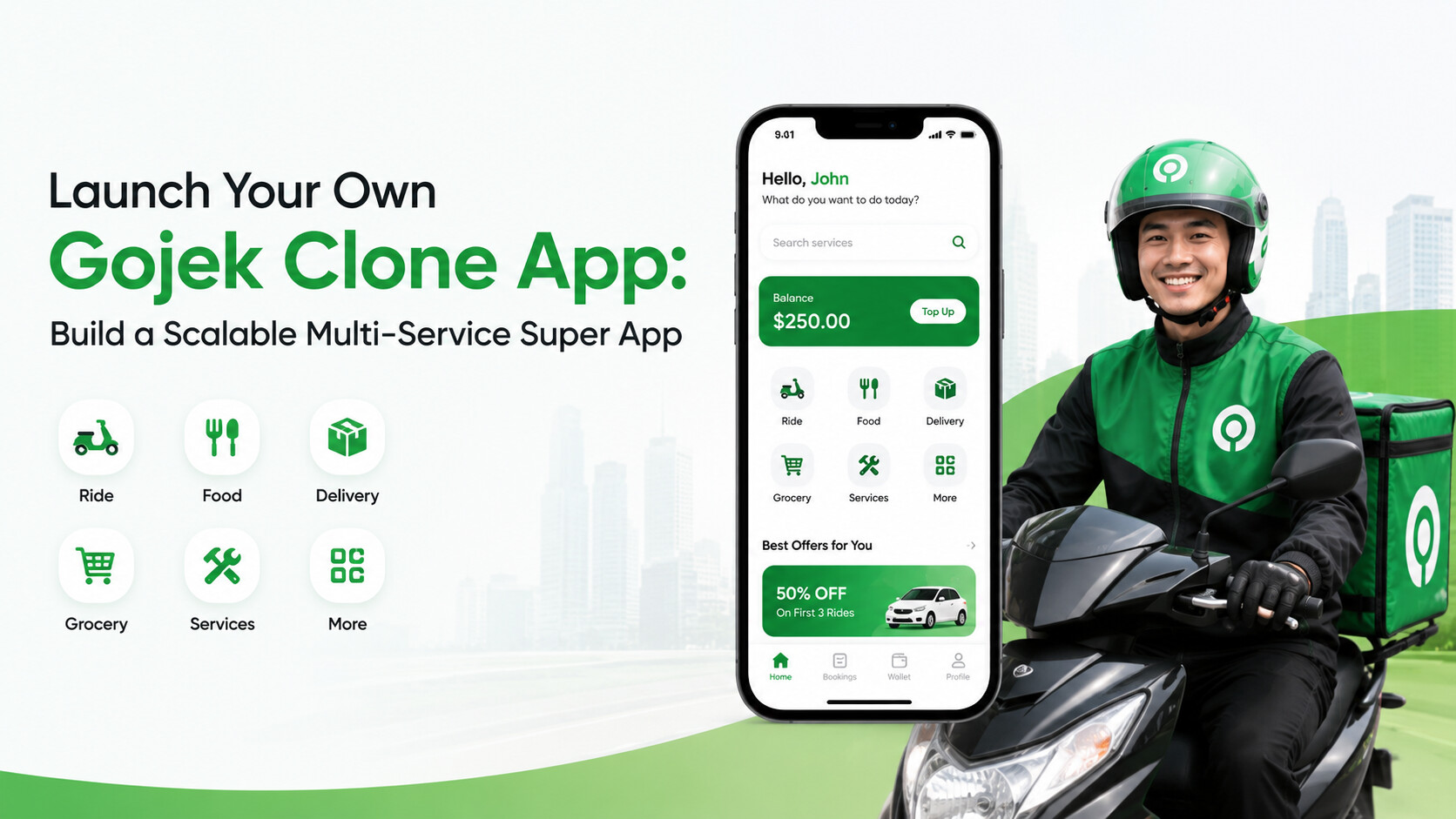
The demand for convenient, on-demand services is transforming how people book rides, order essentials, and access everyday services. A Gojek Clone App gives entrepreneurs the opportunity to bring multiple services together in one powerful platform. With TechBuilder, businesses can launch a customizable and scalable multi-service app designed around their market and growth goals.
Key benefits include:
-
Multiple Services: Offer ride-hailing, taxi booking, courier delivery, eCommerce, home services, medicine delivery, and more.
-
AI-Powered Dispatch: Automatically connect customers with nearby service providers for faster fulfillment.
-
Live GPS Tracking: Track rides, deliveries, and service providers in real time.
-
Secure Payments: Support cards, UPI, mobile wallets, and other convenient payment options.
-
Smart Management: Manage customers, providers, bookings, payments, and performance through dedicated dashboards.
-
Scalable Technology: Expand your service categories and grow your platform as your business evolves.
With TechBuilder, you can turn your multi-service business idea into a modern, intelligent, and scalable super app.
When planning a multi-service app, the goal should be to make it easier for users to access related services from one platform while also giving businesses a manageable way to operate them. The exact features will depend on the services and market you are targeting, but there are several core functionalities worth considering from the beginning.
Some of the features I would consider essential are:
-
Multiple service categories: Ride-hailing, taxi booking, food or grocery delivery, courier services, home services, medicine delivery, and other categories can be added depending on the target market.
-
User registration and profiles: Customers should be able to create accounts, manage their profiles, save addresses, view booking history, and manage their preferences.
-
Service provider app: Drivers, delivery partners, and other service providers need a separate interface to receive requests, accept or reject jobs, manage availability, and view their earnings.
-
Smart dispatch: Automatically assigning requests to suitable nearby providers can reduce waiting time and improve fulfillment.
-
Real-time GPS tracking: Customers should be able to see the location and status of their driver or service provider during an active booking.
-
Multiple payment options: Supporting cards, UPI, wallets, cash payments, and other locally preferred methods can make the platform more convenient.
-
Ratings and reviews: Customers and service providers can rate each other, helping maintain service quality and identify recurring issues.
-
Promotions and referral features: Coupons, discounts, referral rewards, and promotional campaigns can help attract and retain users.
-
Admin dashboard: Administrators need centralized control over users, providers, bookings, payments, commissions, service categories, complaints, and platform activity.
-
Notifications: Push notifications, SMS, and email alerts can keep users and providers informed about booking confirmations, status changes, payments, and cancellations.
-
Analytics and reports: Tracking bookings, revenue, cancellations, provider performance, and customer activity can help business owners make better operational decisions.
-
Scalable architecture: This becomes particularly important when more service categories, providers, and customers are added over time.
Instead of trying to launch every service at once, I’d focus on the categories that have the strongest demand in the target market and build the platform around those first. Once the core operations are working smoothly, additional services can be introduced as the business grows. If you’re evaluating development options, companies such as V3Cube Technolabs offer solutions for on-demand and multi-service platforms, so they can be included in the list of providers to research and compare.