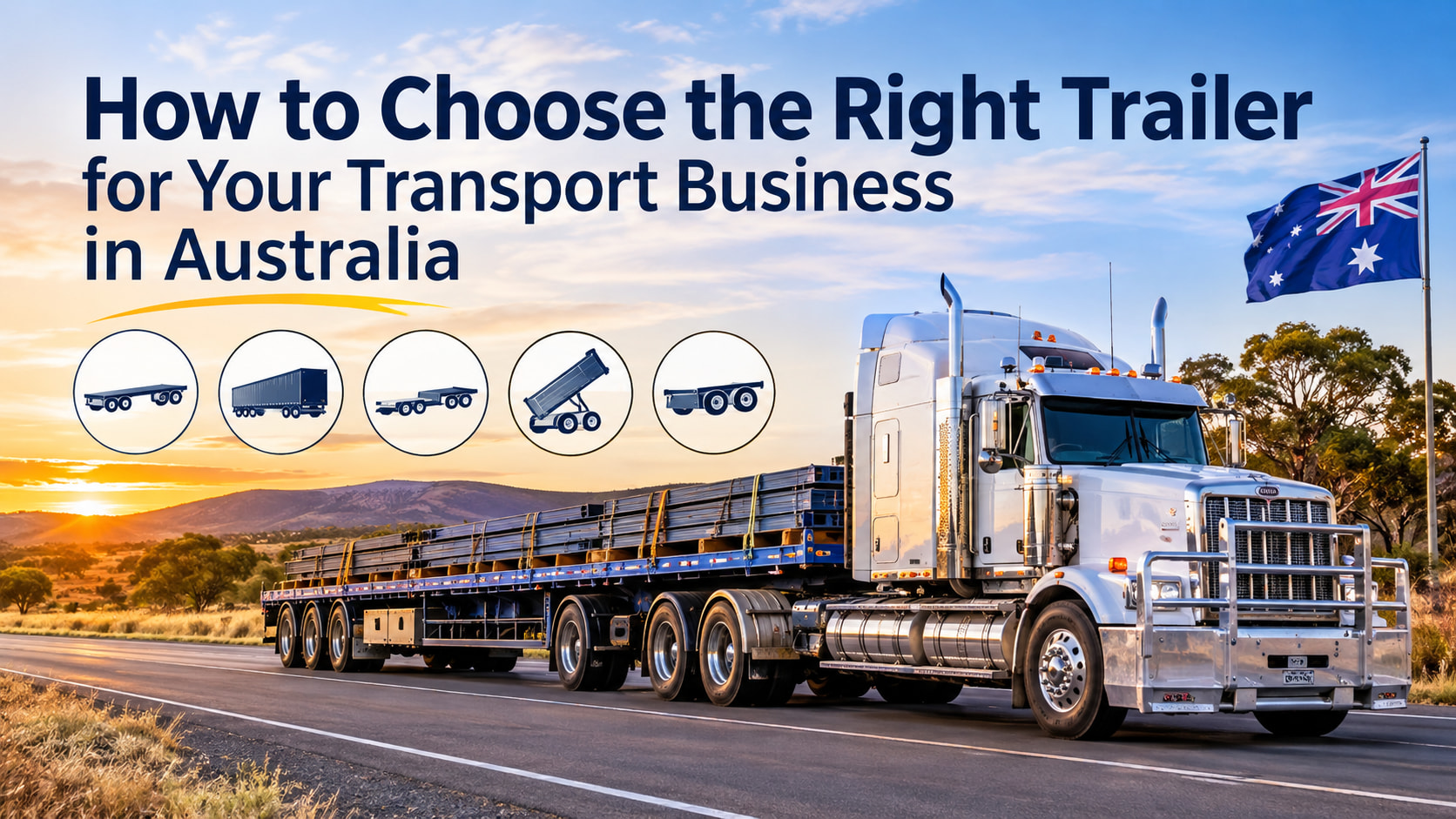
Australia’s transport and logistics industry plays an important role in moving goods, machinery, construction materials and commercial freight across the country. For transport operators, choosing the right trailer is essential for maintaining efficiency, managing operating costs and ensuring safe deliveries. Whether you run a small transport company, manage a commercial fleet or work in construction and logistics, selecting suitable equipment can make a significant difference to your daily operations.
With various trailer types available, understanding their features, applications and load capacities can help businesses make better decisions. From flat top trailers and curtainsiders to drop decks and tipper trailers, each configuration is designed for specific transportation requirements.
Here are some important factors to consider when choosing the right trailer for your transport business in Australia.
1. Understand Your Business Transportation Requirements
Before selecting a trailer, consider the type of cargo your business transports regularly. Different loads require different trailer configurations, and choosing equipment that matches your operations can improve productivity and reduce unnecessary costs.
For example, businesses transporting pallets, general freight and building materials may benefit from flat top or curtainsider trailers. Companies handling heavy machinery and oversized equipment may require drop deck trailers with suitable loading arrangements.
Similarly, construction and mining businesses transporting sand, gravel, soil and other bulk materials often use end tipper or side tipper trailers.
Start by identifying your common cargo types, average load weights, delivery distances and loading requirements. This will help narrow down the available options and ensure the trailer you select is suitable for your intended work.
2. Explore Different Types of Commercial Trailers
Understanding the main trailer categories is important when choosing equipment for your fleet. Each type offers different advantages depending on the nature of your transport operations.
Flat Top Trailers
Flat top trailers are widely used for transporting general freight, construction materials, machinery and oversized loads. Their open platform provides flexibility when loading and unloading different types of cargo.
They are suitable for transport operators who handle varied freight requirements and need an adaptable trailer configuration.
Curtainsider Trailers
Curtainsider trailers feature flexible side curtains that allow convenient access to cargo. They are commonly used in freight distribution, warehousing and logistics operations.
Their side-loading capability can make loading and unloading more efficient, particularly when handling palletised goods.
Drop Deck Trailers
Drop deck trailers feature a lowered deck section that provides additional clearance for taller machinery and equipment. They are commonly used in construction, mining, agriculture and heavy haulage.
When transporting excavators, loaders and other machinery, choosing a suitable drop deck configuration can help accommodate different equipment dimensions.
End Tipper and Side Tipper Trailers
Tipper trailers are designed for transporting and unloading bulk materials. End tippers discharge their loads through the rear, while side tippers unload materials from the side.
These trailers are commonly used in mining, earthmoving, construction and agricultural operations. The right configuration depends on the unloading environment, material type and project requirements.
Dolly Trailers
Dolly trailers are used in compatible heavy vehicle combinations to connect additional trailers. They can support transport operations that require longer vehicle combinations and additional freight capacity.
Before selecting a dolly trailer, check coupling compatibility, axle ratings and applicable heavy vehicle requirements.
3. Check Load Capacity and Weight Limits
Load capacity is one of the most important considerations when choosing a commercial trailer. Every trailer has specified weight ratings, and operators must understand these limits before transporting goods.
Important specifications include Aggregate Trailer Mass (ATM), Gross Trailer Mass (GTM), tare weight, payload capacity and axle load limits.
Always check the manufacturer’s specifications and calculate the expected payload before loading the trailer. Remember that the weight of the cargo, equipment and accessories must remain within the applicable limits.
Australian heavy vehicle regulations also establish requirements for vehicle dimensions, mass limits and approved combinations. Depending on the vehicle and route, additional restrictions or permits may apply.
Overloading can affect braking performance, vehicle stability, tyre condition and overall road safety. Choosing a trailer with an appropriate load rating helps protect your equipment, drivers and other road users.
4. Consider the Routes and Locations Where You Operate
Your operating environment can influence which trailer is most suitable for your business. Transport operators working across regional areas may have different requirements from businesses delivering goods within metropolitan locations.
Consider road conditions, loading facilities, access restrictions, travel distances and delivery locations before selecting equipment.
For businesses operating in Western Australia, local availability and project requirements should also be considered. If you need equipment for operations around the metropolitan area, exploring trailer hire in Perth can help you understand the types of trailer and equipment hire options available locally.
Planning around your operating locations can help reduce unnecessary travel, improve scheduling and ensure the selected trailer is suitable for the intended routes.
5. Compare Buying and Hiring Commercial Trailers
Purchasing a commercial trailer can be a good investment for businesses with consistent and long-term transportation requirements. Owning equipment provides greater control over its use and availability, but it also involves significant upfront costs and ongoing responsibilities.
These may include maintenance, registration, insurance, storage and depreciation.
For businesses with changing workloads, seasonal demand or temporary projects, commercial trailer hire can provide a more flexible alternative.
Hiring allows businesses to access different trailer configurations when required without purchasing every type of equipment. This can be particularly useful for smaller transport operators and companies managing multiple projects.
Before deciding, compare the total cost of ownership with the expected hire expenses. Consider how frequently the trailer will be used, the duration of each project and the maintenance responsibilities associated with ownership or hiring.
The best option will depend on your business model, financial position and operational requirements.
6. Inspect the Trailer Before Hiring
Safety should always be a priority when selecting and using hired equipment. Before accepting a trailer, carry out a detailed inspection to identify any existing damage or mechanical issues.
Pay attention to tyre condition, wheel nuts, braking systems, suspension, lights, electrical connections, coupling equipment and the trailer chassis.
Also inspect the load restraint equipment and ensure it is suitable for the type of cargo you intend to transport.
Take photographs of the trailer before collection and make sure any existing damage is recorded. Review the hire agreement carefully, including insurance arrangements, security deposits, maintenance responsibilities and return conditions.
A proper pre-hire inspection can help prevent disputes and reduce the risk of unexpected problems during transportation.
7. Look for Flexible Truck and Trailer Hire Options
Transport requirements can change throughout the year. A business may need additional equipment during busy periods, while another project may require a specialised trailer for only a few weeks.
Flexible truck and trailer hire arrangements can help businesses respond to these changing requirements without making large capital investments.
Online marketplaces have also made it easier to explore equipment listings, compare hire rates and review trailer specifications. Instead of relying entirely on traditional equipment sourcing methods, businesses can browse different options and contact equipment owners through digital platforms.
When comparing trailer hire options, consider the equipment condition, availability, location, hire duration and booking conditions. Always confirm that the trailer meets your operational and regulatory requirements before making a booking.
8. Plan for Long-Term Fleet Efficiency
Choosing the right trailer should be part of a broader fleet management strategy. Regularly reviewing your transportation requirements can help identify which equipment is essential and which trailers are only needed occasionally.
Monitor trailer utilisation, maintenance expenses, downtime and operating costs. This information can help you decide whether purchasing additional equipment or using flexible hire arrangements would be more practical.
It is also important to keep up with maintenance schedules and ensure that trailers are inspected regularly. Well-maintained equipment can support safer operations and reduce unexpected interruptions.
By matching equipment to actual business demand, transport operators can improve fleet utilisation and manage their resources more effectively.
Conclusion
Choosing the right trailer for your transport business in Australia requires careful planning and an understanding of your operational requirements. Cargo type, load capacity, road conditions, safety standards and overall costs should all influence your decision.
From flat top and curtainsider trailers to drop decks, tippers and dollies, each configuration serves a specific purpose. Understanding these differences will help you select suitable equipment for your transportation needs.
Whether you decide to purchase your own fleet or explore flexible commercial trailer hire options, making informed equipment decisions can improve operational efficiency, control costs and support the long-term growth of your transport business.